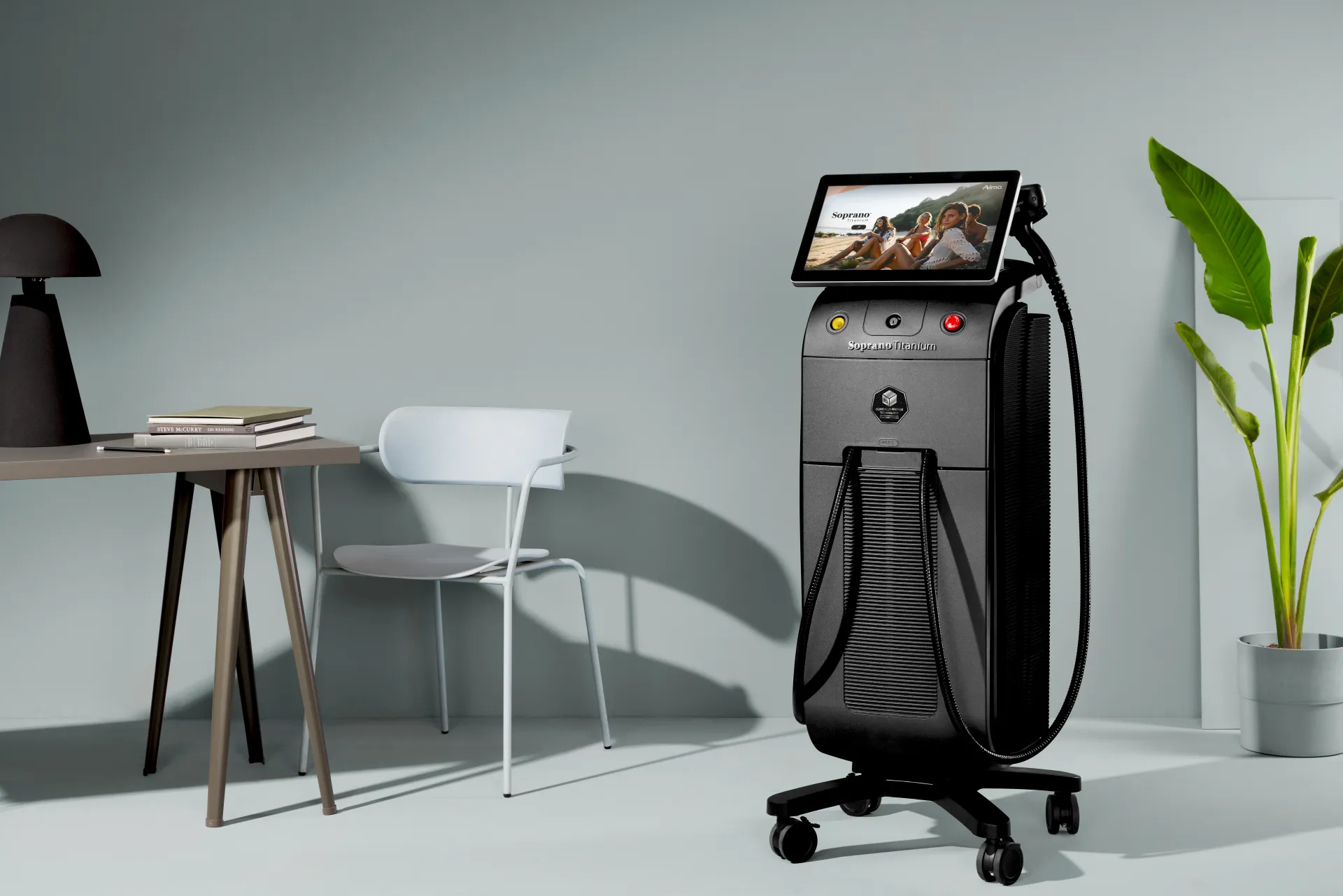
How Titanium Lifting Works
Titanium Lifting uses radiofrequency energy to generate controlled thermal zones within the dermis and subcutaneous tissue layers. The device delivers energy at depths ranging from 2mm to 4mm, heating target tissue to 55-65 degrees Celsius. This precise thermal delivery causes existing collagen fibers to contract immediately while simultaneously activating fibroblasts to produce new collagen and elastin over the following weeks. Unlike monopolar radiofrequency systems that heat volumetrically from the surface, Titanium targets specific tissue planes for more predictable and uniform results.
The treatment applicator maintains continuous contact with the skin surface while an integrated cooling mechanism protects the epidermis from thermal damage. Energy is delivered in measured doses quantified in kilojoules (kJ), with a typical full-face session requiring 40-80kJ depending on the treatment protocol. The practitioner adjusts energy parameters based on tissue thickness, skin laxity severity, and the specific facial zones being treated.
What Titanium Lifting Treats
Primary Treatment Areas
Titanium Lifting addresses mid-face sagging, jawline laxity, submental fullness, and neck skin looseness. The lower face and jawline respond particularly well because these areas contain thicker dermal layers that absorb radiofrequency energy efficiently. Jowl formation along the mandibular border shows visible improvement within 2-4 weeks as collagen remodeling progresses. Nasolabial fold depth decreases measurably in approximately 70% of patients after a single treatment session.
Combination Protocols
Titanium Lifting is frequently combined with Onda Coolwaves technology in multi-device protocols. This combination targets different tissue layers simultaneously: Onda addresses superficial fat and dermis while Titanium reaches deeper connective tissue. At RE:BERRY Gangnam, the Onda 40kJ plus Titanium 40kJ combination protocol delivers energy to 3 distinct tissue depths in a single session, enhancing the overall lifting effect beyond what either device achieves independently.
The Treatment Experience
A Titanium Lifting session begins with cleansing and applying a conductive gel to the treatment area. No topical anesthesia is typically required, though sensitive areas like the periorbital region may benefit from numbing cream applied 20 minutes before treatment. The procedure itself takes 30-45 minutes for a full face. Patients describe the sensation as a deep warming feeling with brief intensity peaks during energy pulses. The warming sensation indicates proper energy delivery to the target depth.
Immediately after treatment, mild erythema appears in the treated zones and subsides within 1-3 hours. No bandaging or wound care is required. Patients can apply makeup and resume normal activities the same day. Sun protection with SPF 50 is recommended for 48 hours post-treatment. The zero-downtime profile makes Titanium Lifting practical for patients who cannot take time away from work or social commitments.
Results Timeline and Longevity
Titanium Lifting produces results in two phases. The immediate effect, visible within 24-48 hours, comes from thermal collagen contraction that provides an initial tightening of 10-15%. The secondary effect develops over 8-12 weeks as new collagen fibers form and mature, contributing an additional 15-20% improvement in skin firmness. Peak results typically appear at the 3-month mark following treatment.
Results last 6-12 months depending on the patient's age, skin quality, and lifestyle factors. Maintenance sessions every 6-8 months sustain the lifting effect and compound collagen production over successive treatments. Aesthetic Medicine Specialist Yoon-Gon Ryu notes that patients who complete 2-3 annual sessions over consecutive years achieve progressively better baseline firmness, effectively slowing the visible aging trajectory.
Who Benefits from Titanium Lifting
The ideal candidate for Titanium Lifting is aged 30-60 with mild to moderate skin laxity who prefers non-surgical intervention. Patients with Fitzpatrick skin types I through VI are suitable candidates, as radiofrequency energy is color-blind and does not interact with melanin. Individuals with pacemakers, metal implants in the treatment area, or active skin infections are not eligible. Pregnant or breastfeeding patients should defer treatment until after the nursing period concludes.
Titanium Lifting is not a surgical facelift replacement for patients with severe ptosis or significant volume loss. In cases of advanced sagging, the treatment may serve as a complement to thread lifting or filler protocols rather than a standalone solution. A thorough consultation that includes assessment of tissue quality, fat distribution, and bone structure determines whether Titanium Lifting alone can achieve the desired outcome or whether a multi-modality approach is indicated.